
AI Agent › Use Cases › Retail • aiagent.app
Transforming Supply Chain Management with AI Agents
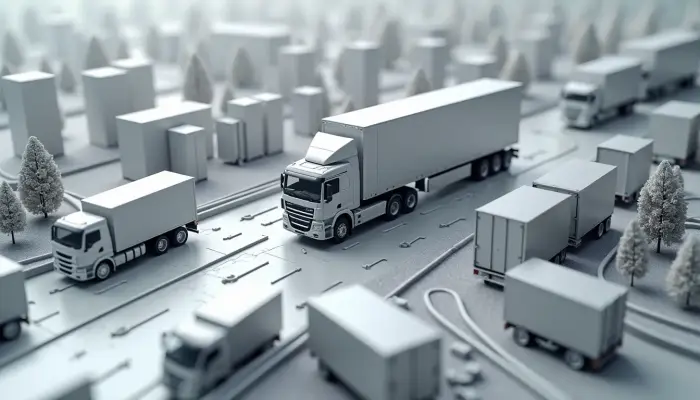
Transforming Supply Chain Management with AI Agents
Artificial Intelligence (AI) is revolutionizing supply chain management by introducing innovative solutions that enhance efficiency, reduce costs, and improve overall performance. AI agents, autonomous systems capable of executing tasks and making decisions, are at the forefront of this transformation. This article explores how AI agents are reshaping supply chain operations, highlighting key use cases, benefits, and integration strategies.
1. Demand Forecasting
AI agents analyze historical sales data, market trends, and external factors to predict future demand with high accuracy. This capability allows companies to anticipate changes and adapt quickly, minimizing disruptions and avoiding stockouts or overstock situations. For instance, AI can simulate potential supply-and-demand scenarios, enabling companies to adjust inventory levels to meet market needs effectively. (aisuperior.com)
2. Inventory Management
AI-driven inventory management solutions automate tracking, predict stock levels, and optimize order fulfillment processes. By leveraging machine learning algorithms, AI agents can identify patterns and trends, ensuring optimal inventory levels and reducing waste. This leads to cost savings and improved customer satisfaction. (restack.io)
3. Supply Chain Automation
AI agents automate various supply chain tasks, including data entry, analysis, and decision-making processes. By handling repetitive tasks, AI frees up human resources to focus on strategic activities, enhancing overall productivity. Additionally, AI can augment human workforces by capturing institutional knowledge and continuously improving decision-making processes. (restack.io)
4. Real-Time Supply Chain Visibility
AI agents provide real-time monitoring of products throughout transit, offering comprehensive visibility across borders and modes of transport. This capability enables companies to preempt disruptions, optimize operations, and meet customer demand for faster deliveries. Technologies like GPS trackers, RFID tags, and Transport Management System (TMS) software, although prevalent, fall short in offering comprehensive visibility. AI-powered solutions address these limitations by integrating data from various sources and providing actionable insights. (ft.com)
Benefits of Integrating AI Agents into Supply Chain Management
-
Enhanced Efficiency: AI agents streamline operations by automating routine tasks and optimizing processes, leading to faster decision-making and reduced lead times.
-
Cost Reduction: By improving demand forecasting and inventory management, AI agents help minimize waste and reduce operational costs.
-
Improved Decision-Making: AI agents analyze vast amounts of data to provide actionable insights, enabling better strategic planning and risk management.
-
Scalability: AI agents can adapt to changing market conditions and scale operations accordingly, ensuring resilience in dynamic environments.
Integration Strategies for AI Agents in Supply Chain Management
-
Assess Current Processes: Evaluate existing supply chain operations to identify areas where AI agents can add value.
-
Select Appropriate AI Solutions: Choose AI tools and platforms that align with organizational goals and integrate seamlessly with existing systems.
-
Data Preparation: Ensure data quality and consistency, as AI agents rely on accurate data for effective decision-making.
-
Pilot Implementation: Start with a pilot project to test AI agents' effectiveness and make necessary adjustments before full-scale deployment.
-
Continuous Monitoring and Improvement: Regularly monitor AI agents' performance and make iterative improvements to enhance outcomes.
Related Resources
Predictions for the Next 5 Years
These are directional expectations based on current trends, not guaranteed outcomes.
-
Increased AI Adoption: A significant rise in AI integration across supply chain functions, leading to more autonomous operations.
-
Enhanced Real-Time Analytics: Development of advanced AI agents capable of providing real-time insights and predictive analytics for proactive decision-making.
-
AI-Driven Sustainability: Utilization of AI to optimize supply chains for sustainability, reducing carbon footprints and promoting ethical sourcing.
-
Collaborative AI Systems: Emergence of AI agents that collaborate across organizations, enhancing end-to-end supply chain visibility and efficiency.
-
Advanced Robotics Integration: Integration of AI agents with robotics for automated warehousing, packaging, and delivery processes.
By embracing AI agents, organizations can transform their supply chain management, achieving greater efficiency, cost savings, and adaptability in an increasingly complex global market.
How the work divides
| Focus area | What the agent does | What stays with a person | What breaks without review |
|---|---|---|---|
| Enhanced Efficiency | Automates supply chain data entry and analysis, monitors products in transit, and combines GPS, RFID, and TMS data to provide actionable visibility. | Supply chain managers use the results for strategic activities and check whether process changes fit operations. | Incorrect data or unchecked insights can hide transit disruptions, delay deliveries, or increase lead times. |
| Cost Reduction | Forecasts demand, predicts stock levels, and optimizes order fulfillment to reduce waste and operational costs. | Inventory managers approve changes to inventory levels and fulfillment plans before implementation. | Poor forecasts can produce stockouts, overstock situations, wasted inventory, and higher operating costs. |
| Improved Decision-Making | Analyzes historical sales data, market trends, external factors, and supply chain data to simulate supply-and-demand scenarios and provide insights for planning and risk management. | Supply chain planners assess the scenarios, weigh risks, and choose inventory or operational actions. | Unchecked analysis can lead to weak demand plans, unsuitable inventory decisions, and missed supply disruptions. |
| Scalability | Adjusts supply chain operations to changing market conditions, monitors products across borders and transport modes, and supports wider visibility as operations grow. | Operations leaders set growth priorities and decide how to respond to changing customer demand and resilience needs. | Unreviewed scaling can spread inaccurate data or unsuitable processes across more orders, routes, and inventory decisions. |
| Assess Current Processes | Reviews existing supply chain operations and identifies processes where automation, data analysis, or visibility can add value. | Supply chain leaders evaluate organizational goals, data quality, system compatibility, and pilot scope. | Applying the agent to inconsistent data or poorly suited processes can produce ineffective decisions and unreliable outcomes. |
Explore all AI agent use cases or start building on AI Agent.
AI in supply chain managementAI agentssupply chain optimizationinventory managementdemand forecastingAI-driven logisticssupply chain automation